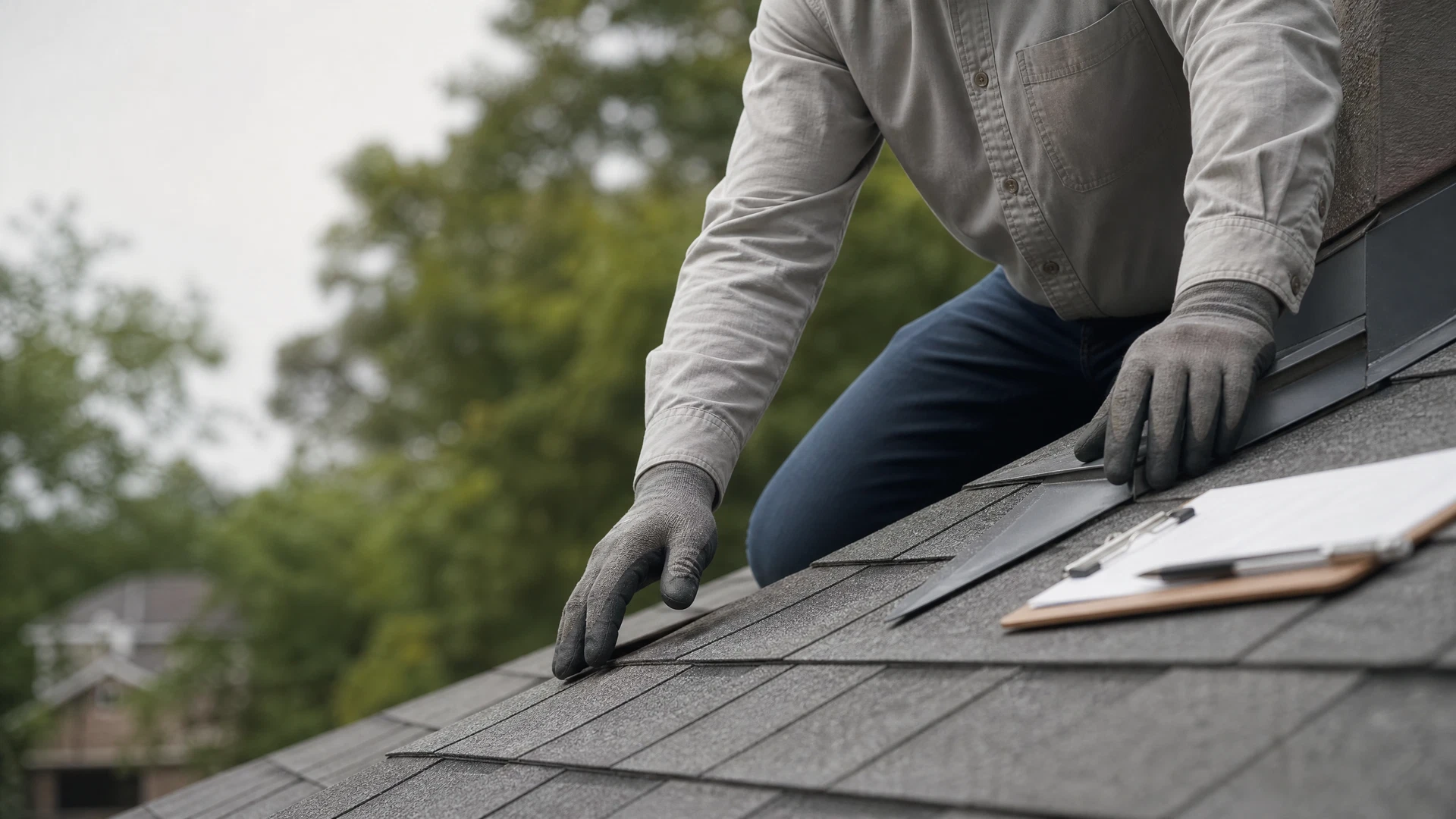
“Never pay the entire bill up front and be wary if a contractor asks for a large down payment.”
— Texas Department of Insurance, “Do you know the signs of a contracting scam?”
Clearly labeled composite scenario
This fictionalized educational scenario combines consumer-protection red flags identified in Texas public guidance. It does not describe a specific person, company, property, or event.
After a severe storm, a homeowner receives an urgent door-to-door offer: sign today, pay most of the contract price immediately, and the crew will “protect the roof before the next rain.” The paperwork is incomplete, the scope is vague, and the salesperson promises that the deductible can be “handled.” Under pressure and worried about water, the homeowner signs.
The crew removes part of the old roof but does not finish the promised work. The homeowner is left with a disrupted project, a difficult documentation trail, and the need to find help before more rain arrives. The lesson is not that every door-to-door contractor is dishonest. It is that urgency should increase—not reduce—the homeowner's care with verification and documents.
The safer path
Read every page before signing. Do not sign a contract with blank sections. Obtain detailed written bids, verify insurance information independently, and use a payment structure tied to completed work. In disaster-declared areas, state rules may also restrict advance payment requests by out-of-area contractors. Contact the insurer directly to open and manage a claim; do not rely on a salesperson's interpretation of coverage.
If something feels wrong
Save documents, photographs, payment records, and messages. Contact local law enforcement for suspected fraud and use the Texas Department of Insurance consumer resources for insurance and contracting-scam questions. The most useful early safeguard is a complete written scope that a homeowner can compare before work begins.
Sources and further reading
Original sources are provided so you can review the complete guidance in context.
Next step
Ready to discuss a new roof?
Share the property basics and timing in a secure inquiry.