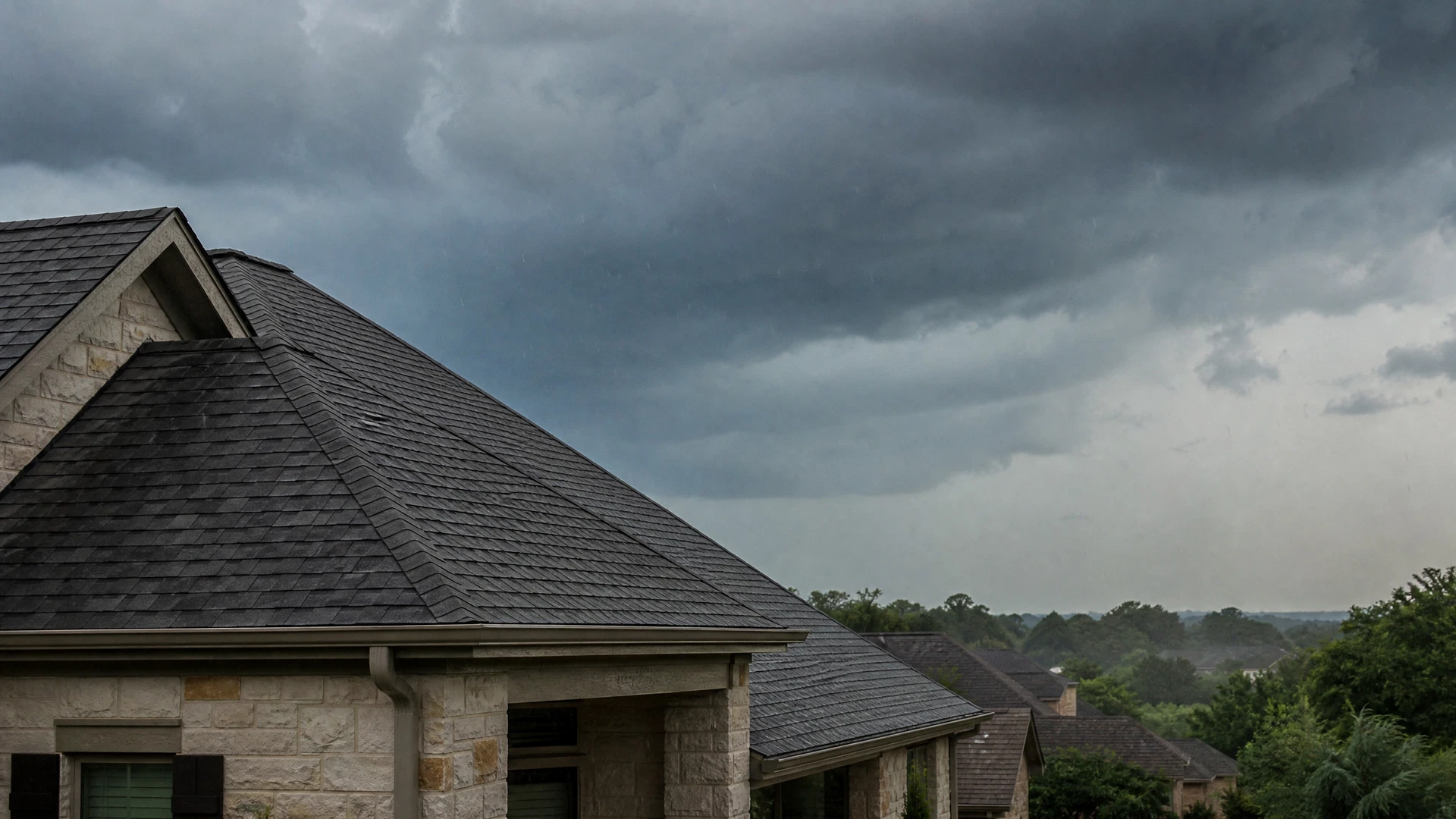
“The highest rainfall amount totaled 48.20 inches at a rain gauge on Clear Creek and I-45 near Houston Texas.”
— Tom Di Liberto, NOAA Climate.gov, “Reviewing Hurricane Harvey's catastrophic rain and flooding”
Houston roofs operate in a climate that can include intense rain, wind-driven storms, high humidity, summer heat, and occasional hail. Each condition interacts with the roof differently. Rain tests drainage and flashing. Wind tests shingle adhesion and edges. Heat and ultraviolet exposure affect roofing surfaces over time. Humidity makes it more important to spot and correct water entry or condensation before moisture persists.
Storm history is context, not a prediction
Hurricane Harvey demonstrates the scale of rainfall possible in the region: NOAA reported a 48.20-inch maximum at a gauge near Clear Creek and I-45 and record rainfall at Houston Hobby Airport. An individual roof's condition, however, cannot be inferred from regional rainfall totals. Homeowners should rely on actual observations, storm dates, and a competent inspection.
What to observe after severe weather
From the ground, look for lifted, missing, cracked, or curled shingles; damaged gutters; loose flashing; branch impact; and debris. Inside, look for wet insulation, attic staining, water marks, or unusual odor. GAF notes that wind, hail, and heavy rain can affect shingles, gutters, flashing, and other roof areas. This helps explain why a whole-roof inspection looks beyond the field shingles.
A seasonal rhythm for maintenance
Before the most active storm periods, remove roof-adjacent limb hazards, arrange gutter service, and note existing cosmetic conditions. After material weather events, photograph observations, keep any temporary-repair receipts, and seek an inspection if conditions have changed. An inspection every few years may also identify aging components before a more disruptive event reveals them.
Do not overpromise material performance
No roofing material eliminates the need for installation quality, drainage, ventilation, and maintenance. A product's rating or warranty has specific conditions. Read the actual documentation and discuss whether the selected system, accessory package, and installation method suit the home's design and local exposure.
Sources and further reading
Original sources are provided so you can review the complete guidance in context.
Next step
Ready to discuss a new roof?
Share the property basics and timing in a secure inquiry.